About us
About ENCORE
ENCORE (Environmental Corruption Response) is a European Union–funded project designed to address the corruption–pollution nexus and how corrupt practices enable environmental offences, including by concealing the offences and shielding perpetrators from enforcement. The project responds to a growing operational need across Europe to better understand and disrupt corruption mechanisms that facilitate pollution crimes—particularly in relation to illicit trafficking in waste, fluorinated gases (F-gases) and ozone-depleting substances (ODS).
Corruption can affect every stage of these crimes: influencing policy choices, distorting procurement procedures, obtaining permits through undue advantage, manipulating inspections, and shielding illicit operations through collusion and document fraud. When these vulnerabilities are exploited, pollution crimes become easier to commit, harder to detect, and more profitable—often facilitating other criminal activities and undermining environmental governance and the rule of law.
ENCORE strengthens Europe’s capacity to address this threat through an integrated approach built on three pillars:
Research and knowledge development
ENCORE collects and analyses data on corrupt practices linked to pollution crimes, identifying trends, enforcement gaps, and effective countermeasures. Research outputs are translated into practical resources tailored to different audiences, including enforcement agencies, policymakers, journalists, civil society, and the wider public.
Capacity-strengthening for frontline professionals
ENCORE bridges expertise between environmental crime and anti-corruption communities by delivering targeted training activities. Mainly targeted at law enforcement professionals, these activities also support prosecutors, judges, customs administrations, inspectorates, and other competent authorities in improving investigative strategies and strengthening cross-sector cooperation.
Intelligence gathering and risk analysis
ENCORE gathers and assesses information on relevant illicit markets and routes, developing actionable insights and risk indicators (“red flags”) to support detection and prevention. Outputs include briefings and user-friendly online tools that help stakeholders recognise corruption patterns and intervene in time.
By combining evidence, operational tools, and training, ENCORE contributes to more effective investigations, stronger institutional resilience, and more coherent responses to environmental crime across Europe—by targeting the corruption that makes pollution crimes possible.
ENCORE is implemented by an international, multi-disciplinary consortium of organisations from all over Europe, which pools specialised expertise from the anticorruption and environmental crime fields.

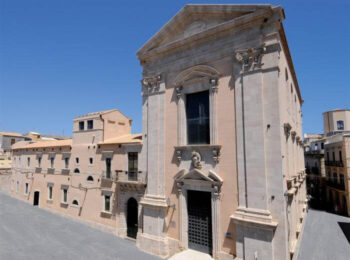
The Siracusa International Institute is an NGO established in Siracusa, Italy in 1972 by the International Association of Penal Law (AIDP/IAPL), in cooperation with the City, Province, and Chamber of Commerce of Siracusa (subsequently, a Convention was entered into with the Sicilian Region). The Institute enjoys consultative status with the United Nations and participatory status with the Council of Europe. In 1992, the Institute signed a special cooperation agreement with the United Nations Office in Vienna and became one of the nineteen organisations comprising the United Nations Crime Prevention and Criminal Justice Programme Network.
For over 50 years, the Siracusa International Institute has been engaging in technical cooperation with states and international organisations, delivering educational and training programmes for practitioners, policy makers and legal scholars, and conducting cutting-edge research on global crime and security threats including transnational organised crime. The Institute has been particularly active in the field of AML/CFT in recent years through the implementation of specialized training; capacity-building and research activities, including through its collaboration with the EU AML/CFT Global Facility.
Ambiendura was established in 2006 and has since supported and implemented numerous EU-funded and international projects on environmental compliance and enforcement, working for and with partners such as IMPEL, DG Environment, OECD, UNEP, WorldBank and the World Customs Organization. Since 2022 Ambiendura has led various research initiatives on the nexus between corruption and waste crimes for the Basel Institute on Governance, the OSCE and the UNODC.
Moreover, Ambiendura has experience in organising and delivering capacity building events for LEAs, in developing inspection tools and apps and in fostering operational cross-border collaboration. Moreover, Ambiendura has acted as the representative of coordinators of various EU-funded projects, such as LIFE SWEAP and LIFE SMART Waste, ISF-P WasteForcefand IPA-funded Spiderweb project. Due to its experiences, Ambiendura has a widespread network to LEAs, NGOs and international organisations working either on the matter of environmental crimes or anti-corruption.
EnviCrime Academy was established with the aim of remaining connected to EnviCrimeNet and other networks to strengthen the capacities of LEAs and other stakeholders involved in the fight against environmental crime, using a multidisciplinary and collaborative approach. Its professionals have extensive experience in designing and delivering large-scale training programs and providing operational support to LEAs, ensuring the feasibility of the actions planned in this project. Additionally, they have worked on several EU-funded projects in the fields of environmental protection and security, offering support not only in training and operational activities but also in financial and economic management.
The EnviCrime Academy (ECA) serves as a vital representative of the law enforcement sector, bridging the gap between policy, training, and operational effectiveness in combating environmental crime. With a robust network that spans over 86 countries, ECA has engaged more than 500 professionals in its recent training initiatives, highlighting its extensive reach and influence within this critical field. Originating from the LIFE-SATEC project funded by the European Commission, ECA has been pivotal in forming EnviCrimeNet, an official non-profit organisation dedicated to addressing the challenges of environmental crime. Through these connections, ECA not only embodies the needs and priorities of law enforcement agencies worldwide but also facilitates the dissemination of best practices and results from our project, ensuring that they are integrated into law enforcement strategies globally.
WRI Europe is a legally registered foundation in The Hague, Netherlands, with offices in London, Bonn, Istanbul, and Brussels. WRI Europe works with policymakers, businesses, and civil society to advance practical solutions on climate, pollution, waste, food, energy, land, water, and cities. WRI has a long history of working on waste and pollution, tackling plastic and ocean pollution by mapping hotspots and supporting recycling policies, promoting a circular economy through reuse, sustainable design, and improved city waste management, reducing air pollution with monitoring and data tools, guiding policy and governance for sustainable waste practices and regulations, and providing data and tools like Aqueduct to track pollution and global waste flows.
WRI also has extensive experience in tackling environmental crimes, addressing and reporting on illegal deforestation through projects like Global Forest Watch and hosting the Nature Crime Alliance, a multi stakeholder coalition addressing environmental crimes and their links to corruption, financial crime, and human rights abuses. WRI plays a key role in the organisation of the Private Sector Dialogues on disruption of financial crimes related to crimes that affect the environment, together with the UN Office on Drugs and Crime (UNODC) and INTERPOL. WRI collaborates with EUROPOL and their Financial Intelligence Public Private Partnership (EFIPPP) for supporting waste and pollution crime investigations through the collection and dissemination of information documents and briefings related to waste and pollution crime in response to the 2025 SOCTA priority. Through this work, WRI Europe improves understanding of the methodologies, trade routes, and red flag indicators associated with environmental crimes, helping to identify corruption risks and legal loopholes used to facilitate them. Intelligence and analysis generated through the Dialogues are shared with law enforcement, financial institutions, and anti-corruption bodies.
WRI also works on making this information accessible to academia, journalists and civil society, engaging with networks at UNCAC, IACC, CCPCJ and at the EU Parliament level focusing on financial crimes linked to environmental crimes. By combining knowledge-gathering, capacity-building, and policy support, WRI Europe ensures that information on environmental crime and associated corruption translates into stronger enforcement, informed policymaking, and broader public accountability.
The project consortium also includes four national institutions which will work closely with partners in the implementation of ENCORE.
The State Environmental Inspectorate (SEI) is in charge for conducting inspections and adopting enforcement measures for the purpose of protection of air quality, inland waters and water basins, soil, degradation and pollution of protected flora and fauna, protection of biodiversity, protection of geodiversity and natural resources. The inspectors have the mandate to initiate criminal proceedings before the Basic Public Prosecutor’s Office.
Rijkswaterstaat (RWS) is on behalf of the Ministry for Climate Policy and Green Growth involved in many aspects related to the topic of illegal trade in HFCs. First of all it takes part in the international negotiations of the Montreal Protocol, where – among many other topics – discussions take place on illegal trade and institutional strengthening. Furthermore, The Netherlands currently holds the position of Vice-President of the Compliance Committee under this protocol. RWS also functions in practice as the Dutch competent authority for EU FGAS issues. It had an active negotiating role during the revision of the FGAS Regulation and takes a seat in the EU FGAS Committee on behalf of The Netherlands. RWS works together with Dutch Customs and the Human Environment and Transport Inspectorate (ILT) on many compliance issues, such as combating illegal trade. The ILT is also an active partner in the ENCORE project as an associated partner under the Ministry.
Le Commandement pour l’environnement et la santé (CESAN) is a specialised unit within the French Gendarmerie focused on environmental offences, including illegal waste disposal, trafficking in hazardous substances, and violations of environmental regulations. CESAN works to track, investigate, and dismantle illegal networks involved in activities such as unlawful disposal of hazardous materials or cross-border waste shipments that violate European and national environmental laws. Regarding the illegal trade in HFCs, CESAN collaborates with other enforcement agencies to curb illicit trafficking of these substances.
Servicio de Protección de la Naturaleza (SEPRONA), is a specialised unit within the Guardia Civil. SEPRONA is involved in ensuring compliance with the provisions aimed at the conservation of nature and the environment, protected areas, water resources, as well as hunting, fishing, forestry and any other nature-related resources and performing criminal environmental investigations.